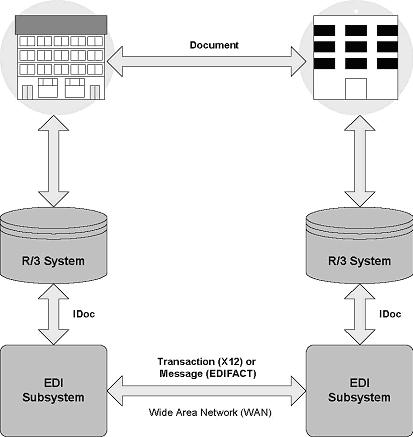
Figure 1–1 Interchange of business documents between two companies using R/3 System
As shown in Figure 1–1, Company A and Company B want to exchange business documents electronically. To achieve electronic data interchange, the business applications (for example, R/3 System) used in these companies would need to generate EDI transactions or messages.
To enable data interchange, the business applications used by Company A and B face the following obstacles:
- Volume of the EDI transactions or messages is high
- Different EDI formats exist for different industries
- EDI standards are constantly upgraded
- Improves data accuracy: With EDI businesses can eliminate the need to re-enter data from paper documents and thus prevent potential data entry errors. Additionally, the cost of processing an electronic requisition is estimated to be one-tenth the cost of handling its paper equivalent.
- Lowers personnel costs: EDI can help companies reduce the need for personnel involved in orders and accounts processing.
- Speeds up information exchange: EDI systems can shorten the lead time between receipt and fulfilment of orders. When
- scheduling information is transmitted with ordering data, companies can plan production more accurately and thus reduce stock inventories.
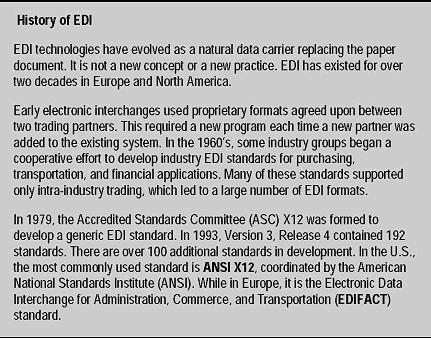
- Reduces technical complexity related to data interchange: With EDI companies use standardized data formats to exchange documents. EDI allows companies using different business applications and systems to achieve computer-to-computer electronic exchange of business documents.
Return to :-
SAP ABAP/4 Programming,
Basis Administration, Configuration Hints and Tips
(c) www.gotothings.com All material on this site is Copyright.
Every effort is made to ensure the content integrity.
Information used on this site is at your own risk.
All product names are trademarks of their respective
companies. The site www.gotothings.com is in no way affiliated with
SAP AG.
Any unauthorised copying or mirroring is prohibited.